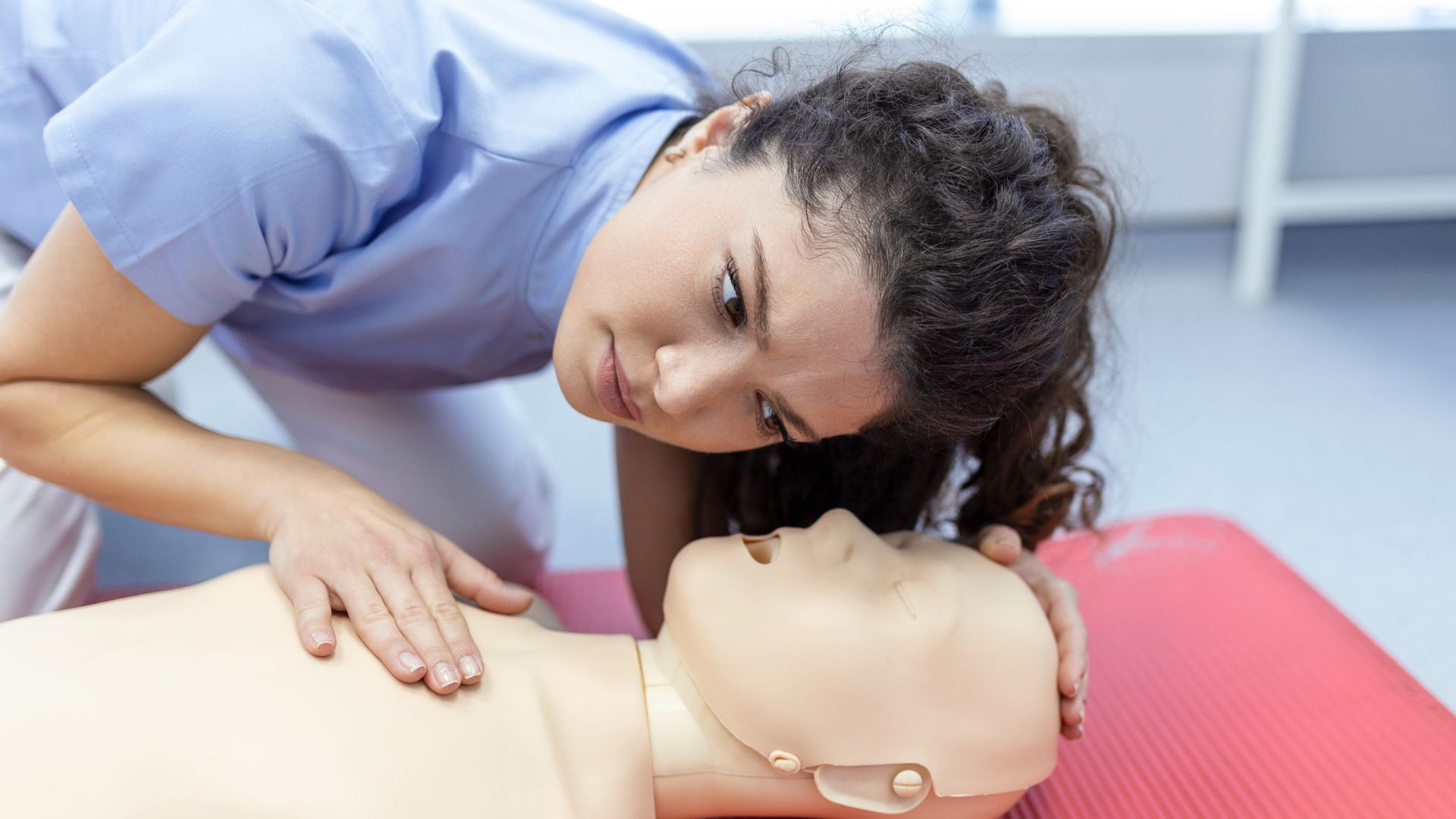
In Columbus, professionals across healthcare, education, childcare, and fitness are required to maintain CPR and BLS certification. With busy schedules, online courses may seem like the easiest option. But when it comes to real emergencies, convenience is not what saves lives. Performance does.
Understanding CPR concepts is important, but being able to apply them under pressure is what truly matters. That is why in-person training continues to be the gold standard. Enrolling in an in-person CPR Certification course ensures you are not just learning the material, but developing the real-world skills needed to respond effectively.
The Key Difference: Knowledge vs. Performance
Online CPR courses are effective at teaching knowledge. They provide flexibility, self-paced learning, and easy access to information.
However, CPR is not just knowledge. It is a physical, hands-on skill that requires precision, timing, and confidence.
In-person BLS training focuses on:
- Performing chest compressions correctly
- Practicing rescue breathing
- Using an AED in real-time scenarios
The goal is not just to know CPR, but to perform high-quality CPR, which is directly tied to survival outcomes.
Why Hands-On Practice Is Non-Negotiable
One of the biggest limitations of online training is the lack of physical practice.
Without hands-on experience:
- Compression depth may be incorrect
- Rhythm and timing may be inconsistent
- Technique errors go uncorrected
In-person classes solve this by allowing you to:
- Practice on CPR mannequins
- Learn correct hand placement and positioning
- Receive immediate feedback from instructors
This real-time correction is critical for building effective skills.
Real-Time Feedback Improves Skill Accuracy
In a classroom setting, instructors observe your technique and make adjustments on the spot.
This includes correcting:
- Compression depth and speed
- Body positioning
- Rescue breath technique
Without this feedback, learners may unknowingly develop poor habits that reduce CPR effectiveness.
Studies consistently show that hands-on, instructor-led training improves both skill accuracy and confidence compared to self-directed learning.
Confidence Is What Drives Action
One of the biggest barriers in emergencies is hesitation. Many people know CPR exists but are unsure how to perform it.
Research shows that individuals trained face-to-face are more willing to perform CPR than those trained virtually.
In-person training builds confidence by:
- Simulating real-life scenarios
- Reinforcing techniques through repetition
- Preparing you for high-pressure situations
Confidence is what turns knowledge into action when every second counts.
Why BLS Requires More Than Basic CPR Knowledge
Basic Life Support (BLS) goes beyond standard CPR. It is designed for professionals who may need to respond as part of a team.
BLS training includes:
- Team-based resuscitation
- Advanced airway management concepts
- Coordinated emergency response
These skills are difficult to fully grasp without hands-on, instructor-led training.
In-person classes allow participants to:
- Practice team roles
- Communicate during simulated emergencies
- Work through real-world scenarios
This type of training cannot be replicated through online modules alone.
Online Training Still Has a Role
Online CPR training is not without value. It offers:
- Flexibility for busy schedules
- Self-paced learning
- Accessibility for remote learners
In fact, some studies show that online learning can improve knowledge and even basic performance when used as a supplement.
However, even major organizations like the American Heart Association require in-person skills testing for certification involving physical CPR skills.
This reinforces an important point. Online learning is helpful, but it is not enough on its own.
Why Blended Learning Still Includes In-Person Training
Many modern CPR programs use a blended format, combining online coursework with in-person skills sessions.
This approach:
- Allows flexibility for learning theory
- Ensures hands-on practice for physical skills
- Meets certification requirements
The in-person component remains essential because it validates your ability to perform CPR correctly in real situations.
Columbus Work Environments Demand Real-World Skills
In Columbus, professionals work in environments where emergencies can happen at any time.
Examples include:
- Hospitals and clinics
- Schools and childcare centers
- Gyms and fitness facilities
In these settings:
- Immediate response is critical
- There is no time to review instructions
- Skills must be automatic and accurate
In-person training prepares you for these realities by building muscle memory and confidence.
Muscle Memory Is What Saves Lives
In an emergency, your body reacts faster than your mind. You will not have time to think through each step.
Hands-on training builds muscle memory so you can:
- Start CPR immediately
- Maintain proper technique
- Stay focused under pressure
This automatic response is what makes the difference in life-threatening situations.
Why Employers Prefer In-Person Certification
Many employers in Columbus specifically require in-person or blended CPR certification.
This is because:
- It ensures hands-on competency
- It meets professional standards
- It reduces liability
In-person certification is widely recognized and trusted across industries, especially in healthcare and childcare.
The Risk of Relying Only on Online Training
While online training is convenient, relying on it alone can create gaps in preparedness.
Potential risks include:
- Lack of confidence in emergencies
- Incorrect technique due to no feedback
- Hesitation to act
These factors can reduce the effectiveness of CPR when it matters most.
Why In-Person Training Builds Long-Term Retention
Skills learned through hands-on practice are more likely to be retained over time.
This is because:
- Physical repetition reinforces memory
- Real-world scenarios improve understanding
- Active learning is more effective than passive learning
In-person training helps ensure that your skills remain sharp, even months after certification.
The Time Investment Is Worth It
One of the main reasons people choose online training is convenience. However, most in-person BLS classes take only a few hours to complete.
In that short time, you gain:
- Hands-on experience
- Real-world confidence
- Life-saving skills
It is a small investment with a significant impact.
Why Columbus Needs More Hands-On Training
Communities with higher rates of CPR training see better outcomes in emergencies.
When more people are trained:
- Response times improve
- More victims receive immediate care
- Survival rates increase
In-person training plays a key role in building a safer, more prepared community.
Final Thoughts on BLS Training in Columbus
When it comes to CPR and BLS training, convenience should never come at the cost of effectiveness. While online courses offer flexibility, they cannot replace the hands-on experience needed to perform CPR correctly in real emergencies.
In-person training provides the practice, feedback, and confidence required to act quickly and effectively when every second counts.
By enrolling in an in-person CPR Certification course, you ensure that you are not just meeting requirements, but truly prepared to save a life. In Columbus, that preparation can make all the difference.
Frequently Asked Questions About BLS Training
Is online CPR training enough for certification?
Most professional certifications require in-person skills testing, even if coursework is completed online.
Why is hands-on training important?
It ensures proper technique, builds confidence, and prepares you for real emergencies.
What is the difference between CPR and BLS?
BLS includes advanced skills and team-based response for professional settings.
How long does BLS certification last?
BLS certification typically lasts two years before renewal.
Can I combine online and in-person training?
Yes, many programs offer blended learning with online coursework and in-person skills sessions.
Why do employers prefer in-person training?
It ensures competency, meets industry standards, and improves real-world performance.